
Women in Process Safety Leadership: Building Safer Technical Teams
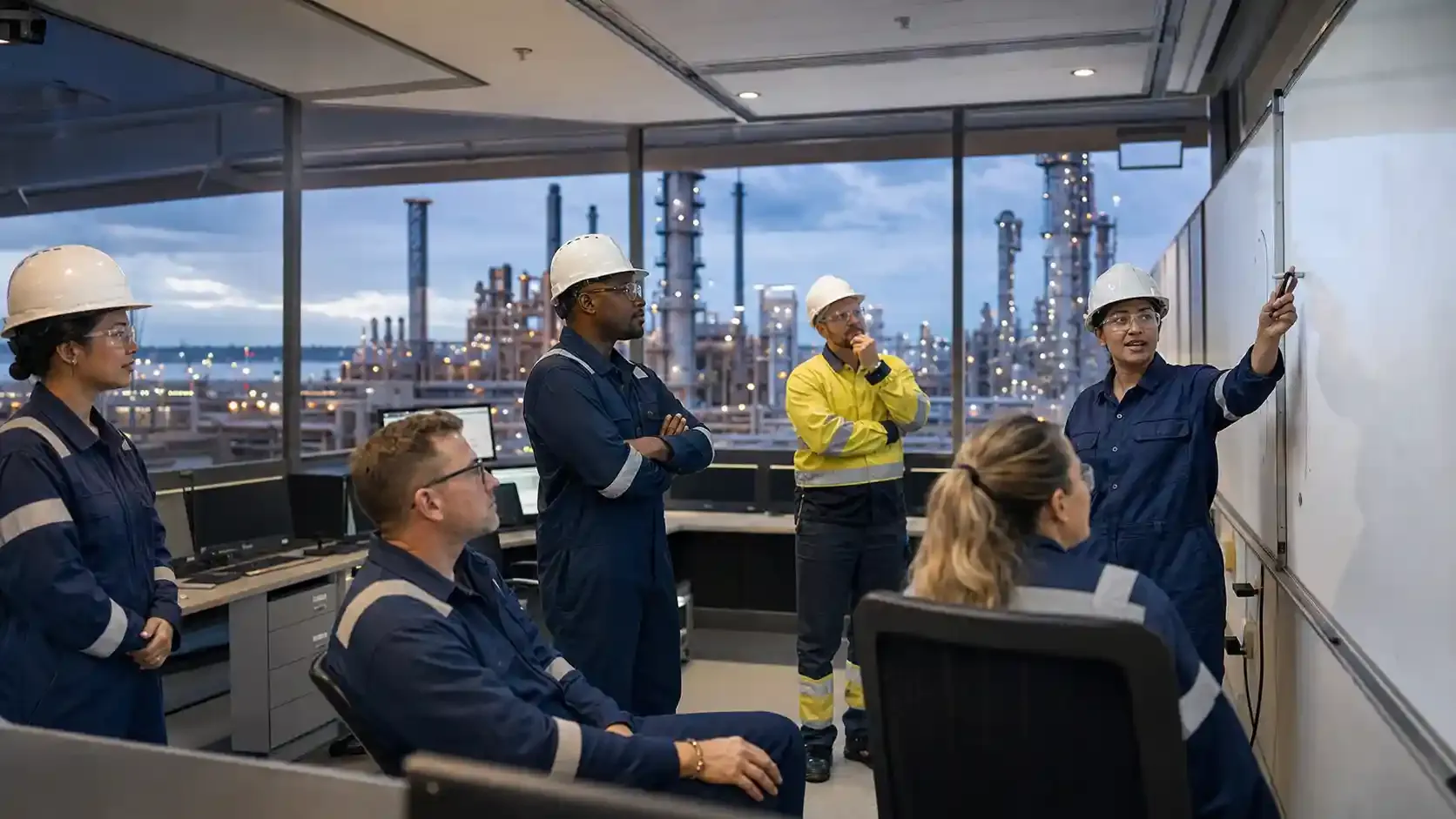
Inclusive technical teams improve challenge, learning and decision quality. This Women's Day, focus on the practical conditions that help women lead safely in high-hazard work.
Women in Process Safety Leadership: Building Safer Technical Teams
Process safety depends on people being able to raise concerns, question weak assumptions and stop unsafe work. That makes inclusion a practical leadership issue, not a ceremonial one. A high-hazard organisation benefits when capable women can enter, remain in and lead technical roles without having to work around exclusion, harassment, poorly designed facilities or a culture that dismisses challenge.
Focus on the work environment
The goal is not to claim that one group is inherently safer than another. The goal is to build conditions where every competent person can contribute their expertise. In a HAZOP, incident review or shift handover, a diverse team can expose blind spots only when people are genuinely heard.
Review the basics:
- Do recruitment and promotion processes give technical talent a fair opportunity?
- Are PPE, welfare facilities, transport, shift arrangements and field equipment suitable for the people who use them?
- Can a junior engineer challenge a senior decision without retaliation?
- Are harassment, bullying and exclusion reported, investigated and addressed?
- Do mentoring and technical-development opportunities reach people who are often excluded from informal networks?
Make participation part of process safety
Participation is already central to sound risk work. The people who operate, maintain and troubleshoot a plant often see weak signals before a formal review does. Worker participation in MHI risk assessments explains how structured involvement improves the quality of evidence and recommendations.
Leaders can make that participation real by rotating speaking order in reviews, asking for dissenting views before accepting a conclusion, recording unresolved concerns, and closing the loop on reports. These are simple habits with a direct effect on learning and decision quality.
Build visible technical pathways
Career development needs more than inspirational messages. Provide meaningful site exposure, competent supervision, training in hazard analysis and incident investigation, and sponsorship for engineers who are ready to lead. Make the next step clear: technical specialist, facilitator, operations leader, integrity engineer, emergency-planning lead or independent assessor.
South African STEM and engineering initiatives in 2026 continue to emphasise women’s participation and leadership. Industry can support that momentum through the practical systems it controls every day.
Measure whether the culture works
Track retention, promotion, training access, speaking opportunities in technical reviews, field-assignment access and the closure of inclusion concerns. Do not reduce the issue to a single headcount. A team is not inclusive if qualified people are present but cannot influence a risk decision.
Stronger safety culture is built through observable behaviour: respectful challenge, competent supervision, reliable reporting and leadership follow-through. MMRisk supports process-safety training, workshop facilitation and culture-focused risk reviews for high-hazard teams. Talk to us about building capability across your organisation.