
Water Scarcity and Process Cooling: The Loss-of-Cooling HAZOP
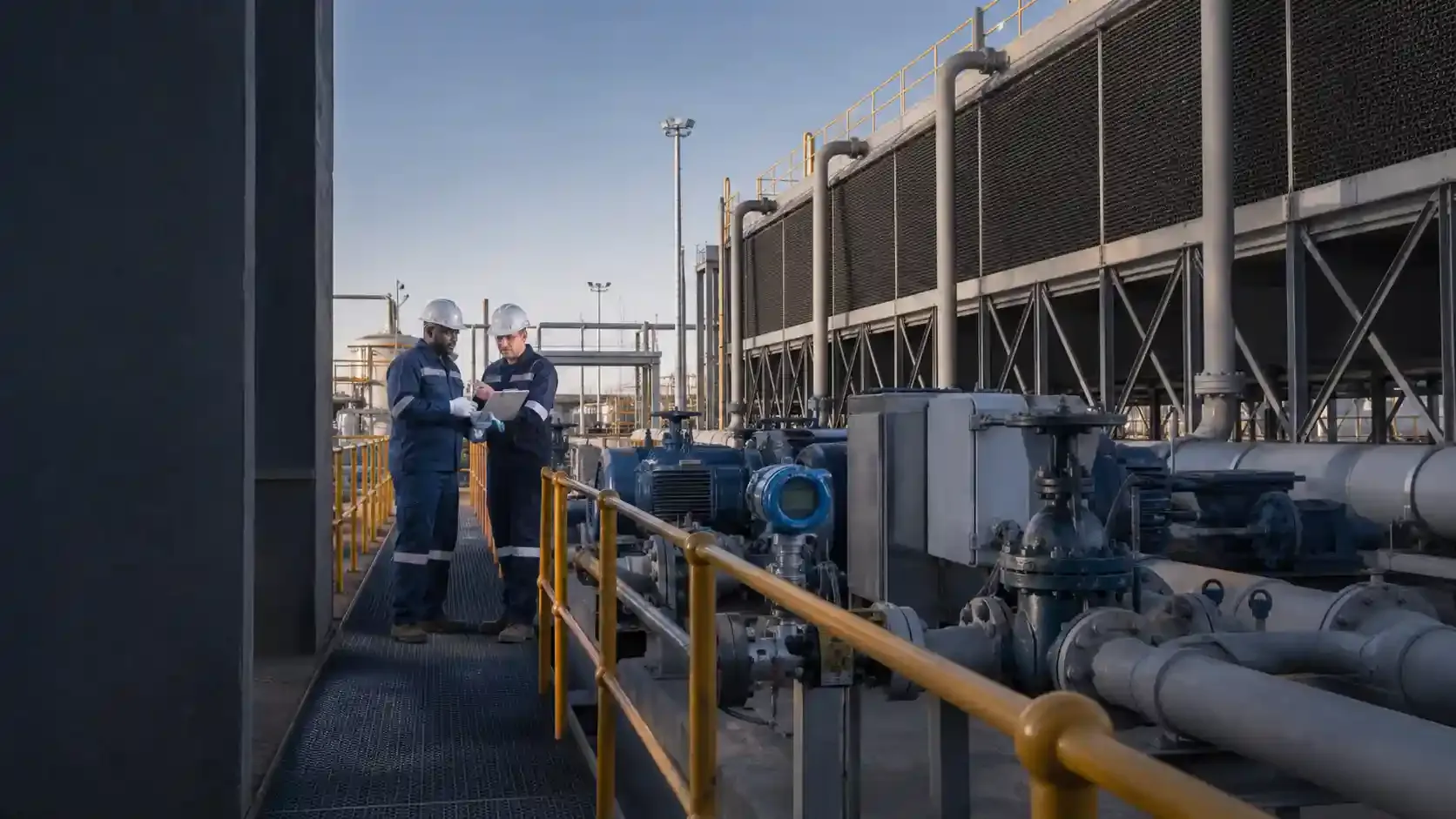
Cooling-water interruptions can quickly become process-safety events. Use a HAZOP-led approach to identify the systems, decisions and contingency measures that protect the plant.
Water Scarcity and Process Cooling: The Loss-of-Cooling HAZOP
Water availability is an operational-resilience issue for South African industry. For many processes, it is also a direct process-safety issue. Loss or degradation of cooling can raise temperature and pressure, impair condensation, reduce reaction control, disable equipment or erode the margin that keeps a process stable.
Identify where cooling protects the process
Map every cooling function, not only the main cooling-water header. Include heat exchangers, reactors, condensers, compressor cooling, quench systems, electrical rooms, emergency generators, instrument cooling and any system whose safe operating limit depends on heat removal.
For each one, record the normal duty, minimum required flow or temperature, detection method, available response time and safe state. A plant may tolerate a short interruption in one service but require immediate action in another.
Use HAZOP to test realistic utility failures
The key deviation is not just “no flow.” Test low flow, high inlet temperature, fouling, pump failure, power loss, valve misalignment, poor water quality, loss of backup supply, incorrect operator response and simultaneous high ambient temperature.
Ask what protects the process if cooling is lost. Is there an alarm? Does it have enough time? Does a trip move the plant to a genuinely safe condition? Can operators reduce heat input, stop feed, vent safely or use an alternative cooling source? These answers should be grounded in process data, not assumptions.
Prevent the secondary problems
Water interruptions can coincide with other vulnerabilities. A high-temperature upset may challenge relief systems, increase vapour generation, overload a flare, release a reactive inventory or create a fire risk. Use consequence modelling and LOPA where the scenario warrants deeper analysis.
Also evaluate water treatment and quality. Scale, corrosion, microbiological growth or contaminated alternative water can reduce heat transfer or damage equipment over time. Reliability is a condition-management issue as well as a supply issue.
Build a practical resilience plan
A credible plan may include storage, alternate sources, standby pumps and power, redundancy, controlled load shedding, cooling-water quality management, operator decision aids and pre-defined production curtailment. The right package is site-specific. It should be tested through drills and reviewed after actual supply disturbances.
Gauteng’s 2026 water-supply disruptions provide a useful reminder that utility failures can arise from infrastructure and equipment issues, not only drought. Facilities should know their cooling dependency before an interruption forces a rushed decision.
Keep risk information current
Changes to water source, treatment, cooling duty, operating rate or backup equipment should be assessed under management of change. Update drawings, procedures, alarm set points, maintenance tasks and emergency plans together.
MMRisk facilitates loss-of-utility HAZOPs, risk studies and emergency planning for high-hazard facilities. Contact our specialists to review your process-cooling resilience.